
Imagine a quiet mountain village then, suddenly, a dread-inducing roar. This roar is none other than what comes from nature. A huge torrential rain crashes down. A violent surge of water rips through the valley. No one expects or measures what happens. This devastation unfolds within minutes, and it is all gone brutally. This is the unannounced fury of nature we call a cloudburst.

The world has experienced multiple cloud bursts. Every cloud burst left a footprint of a terrifying story. Start from human loss, property destruction, livestock disappearance, and infrastructure damage. A few of them catch the attention of the concerned as an alarm of climate change. Among them, one cloud burst occurred in India in 2025.

Jammu and Kashmir, the “heaven on earth”, under Indian Territory, experienced a cloud burst. It was struck by a devastating cloudburst that triggered flash floods. It was so sudden, in seconds; more than 200 people went missing. Around 500 were injured, and hundreds perished. Buildings go earth touched, water-water everywhere, heaven turned into abyss.

 “It felt like the mountain was falling on us,” recalls Amina Begum, a resident reported. “We had no time to think—only to run.”
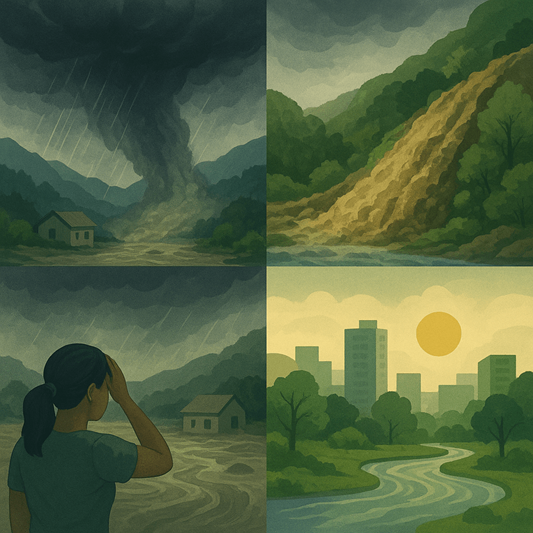
Similarly, Pakistan’s northern regions also witnessed a cloudburst. Unaccounted for lives lost due to such sudden downpours in mountainous terrains. Similarly, Islamabad, Pakistan, in 2001, an intense downpour delivered 620 mm of rain in only 10 hours, killing more than 60 people, triggering widespread flash floods, and destroying hundreds of homes.

Figures are staggering, highlighting the growing severity. Yet, the story of cloudbursts is not confined to one region; it is a global phenomenon. Irrespective of the region, outcomes are similar: a massive destruction of infrastructure and human loss.

A historic cloudburst occurred in Copenhagen, Denmark, in 2011. The city witnessed over two months’ worth of rain in just a few hours. Water everywhere, uncontrolled, unabsorbed, and wasted. No immediate relief work, no rescue communities waiting for help that does not arrive. Maybe exposing fragile systems and the absence of preparedness, but nature became merciless when it is aggressive.

Don’t scroll—read this.

A cloudburst can dump over 100 mm of rain in less than an hour. It is enough to submerge city streets knee-deep.

1. Cloudbursts Rewrite the Landscape Overnight

Cloudbursts tear apart delicate ecosystems where debris flows strip away fertile soil and uproot vegetation. In narrow river valleys, it degrades fragile landscapes in particular. Risk is amplified in glacier-endowed regions.  The likelihood of glacial lake outburst floods (GLOFs) increases when glacier melt is combined with heavy monsoon rains. It becomes a threatening situation for downstream communities, habitats, and infrastructure.

Landslide frequency increases, which alter river courses and accelerate erosion. It may take decades to restore and repair. But believe the rehabilitation becomes more difficult than before.  Repeated events imbalance the ecological system, reduce biodiversity, and increase sedimentation in rivers and lakes. The whole system turns upside down.

 “We used to fish here, Now, it’s just mud”, outcomes of cloudburst.

2. Climate at the Helm

Climate change is the key driver behind the intensification of extreme rainfall events, including cloudbursts. Global warming and rising temperatures warm the atmosphere. The capacity to hold moisture rises, which leads to high precipitation. Glacier retreat and surface warming further influence local atmospheric instability, thus increasing the likelihood of intense rainfall events. It acts like a circle.

The implications go far beyond the immediate chaos, starting from socio-economic to sustainability concerns. From a socio-economic perspective, cloudbursts displace families and destroy homes. It erodes the sense of security in affected communities. It generates a poor behavior of socio-psychology with terror and anxiety of recurring. In minutes, when things go out of sight, it makes people emotionally lethargic as they have no choice but to take action.

From an economic perspective, local businesses are crippled and drain public finances. Government projects halt, resources diverted toward emergency response and reconstruction. Agricultural productivity drops to zero along with soil degradation.

Fast Fact-It felt unreal
“We woke up to sunshine, and by afternoon. The water was at our doorstep, it felt unreal.”-public views

This destruction does not consist of years, or even months but in mere hours or days only.It seems a cloudburst is the competitor of an earthquake. The only difference is that earthquakes belong to the earth and cloudbursts belong to the sky, making it among the most sudden natural disasters known.

These incidents are unpredictable and unpreventable, and the frequency of their occurrence is increasing day by day, especially in the monsoon season.

3. Turning Fury into Fortitude

While cloudbursts are unstoppable, to some extent their impact can be reduced through preparedness and smart planning: Early warning systems can make people well aware of the season update and provide them an opportunity to move to safe areas. This is pre-cloudburst strategies; for post-bursts, resilient infrastructure—bridges, roads, and drainage systems built for extreme rain can play a significant role. Long-term strategies to avoid and protect from cloudburst are nbs. Nature-based solutions (nbs) like reforesting slopes and restoring wetlands to absorb sudden water surges are effective measures. Among all Community awareness programs, it is indispensable so that people know how to react when seconds count.

Recall this…
Copenhagen’s “Cloudburst Management Plan” has planned a mega project to use parks, green roofs, and canals to store and redirect stormwater. It has the potential to save billions in potential damage.

Closing: A Call to Action

Cloudbursts are no longer rare freak events; they are a growing climate reality. They have the capacity to unravel ecosystems in hours. Collective actions are needed that can help to stand stronger against the sky’s unannounced fury.

It is time to wake up to the reality. It is more than imagination, as the occurrence of cloudbursts is thought-provoking, but the increased frequency of them is more than intriguing. Governments, scientists, and citizens have to work together not just to survive the next cloudburst, but to thrive despite it.

Here, the role of the Green HUB Initiative is very crucial. We are not in a position to cope with the post-cloudburst situation; we are working on the pre-cloudburst program. We spread awareness through our blogs and SLS programs about its impact. Our practical work involves sustainable cities through urban forestation drive. Urban forestation controls the city temperature and causes regular rainfall rather than unexpected cloudbursts. So our work is a nature-based solution through community involvement.

Imagine a quiet mountain village then, suddenly, a dread-inducing roar. This roar is none other than what comes from nature. A huge torrential rain crashes down. A violent surge of water rips through the valley. No one expects or measures what happens. This devastation unfolds within minutes, and it is all gone brutally. This is the unannounced fury of nature we call a cloudburst.

The world has experienced multiple cloud bursts. Every cloud burst left a footprint of a terrifying story. Start from human loss, property destruction, livestock disappearance, and infrastructure damage. A few of them catch the attention of the concerned as an alarm of climate change. Among them, one cloud burst occurred in India in 2025.

Jammu and Kashmir, the “heaven on earth”, under Indian Territory, experienced a cloud burst. It was struck by a devastating cloudburst that triggered flash floods. It was so sudden, in seconds; more than 200 people went missing. Around 500 were injured, and hundreds perished. Buildings go earth touched, water-water everywhere, heaven turned into abyss.

 “It felt like the mountain was falling on us,” recalls Amina Begum, a resident reported. “We had no time to think—only to run.”

Similarly, Pakistan’s northern regions also witnessed a cloudburst. Unaccounted for lives lost due to such sudden downpours in mountainous terrains. Similarly, Islamabad, Pakistan, in 2001, an intense downpour delivered 620 mm of rain in only 10 hours, killing more than 60 people, triggering widespread flash floods, and destroying hundreds of homes.

Figures are staggering, highlighting the growing severity. Yet, the story of cloudbursts is not confined to one region; it is a global phenomenon. Irrespective of the region, outcomes are similar: a massive destruction of infrastructure and human loss.

A historic cloudburst occurred in Copenhagen, Denmark, in 2011. The city witnessed over two months’ worth of rain in just a few hours. Water everywhere, uncontrolled, unabsorbed, and wasted. No immediate relief work, no rescue communities waiting for help that does not arrive. Maybe exposing fragile systems and the absence of preparedness, but nature became merciless when it is aggressive.

Don’t scroll—read this.

A cloudburst can dump over 100 mm of rain in less than an hour. It is enough to submerge city streets knee-deep.

1. Cloudbursts Rewrite the Landscape Overnight

Cloudbursts tear apart delicate ecosystems where debris flows strip away fertile soil and uproot vegetation. In narrow river valleys, it degrades fragile landscapes in particular. Risk is amplified in glacier-endowed regions.  The likelihood of glacial lake outburst floods (GLOFs) increases when glacier melt is combined with heavy monsoon rains. It becomes a threatening situation for downstream communities, habitats, and infrastructure.

Landslide frequency increases, which alter river courses and accelerate erosion. It may take decades to restore and repair. But believe the rehabilitation becomes more difficult than before.  Repeated events imbalance the ecological system, reduce biodiversity, and increase sedimentation in rivers and lakes. The whole system turns upside down.

 “We used to fish here, Now, it’s just mud”, outcomes of cloudburst.

2. Climate at the Helm

Climate change is the key driver behind the intensification of extreme rainfall events, including cloudbursts. Global warming and rising temperatures warm the atmosphere. The capacity to hold moisture rises, which leads to high precipitation. Glacier retreat and surface warming further influence local atmospheric instability, thus increasing the likelihood of intense rainfall events. It acts like a circle.

The implications go far beyond the immediate chaos, starting from socio-economic to sustainability concerns. From a socio-economic perspective, cloudbursts displace families and destroy homes. It erodes the sense of security in affected communities. It generates a poor behavior of socio-psychology with terror and anxiety of recurring. In minutes, when things go out of sight, it makes people emotionally lethargic as they have no choice but to take action.

From an economic perspective, local businesses are crippled and drain public finances. Government projects halt, resources diverted toward emergency response and reconstruction. Agricultural productivity drops to zero along with soil degradation.

Fast Fact-It felt unreal
“We woke up to sunshine, and by afternoon. The water was at our doorstep, it felt unreal.”-public views

This destruction does not consist of years, or even months but in mere hours or days only.It seems a cloudburst is the competitor of an earthquake. The only difference is that earthquakes belong to the earth and cloudbursts belong to the sky, making it among the most sudden natural disasters known.

These incidents are unpredictable and unpreventable, and the frequency of their occurrence is increasing day by day, especially in the monsoon season.

3. Turning Fury into Fortitude

While cloudbursts are unstoppable, to some extent their impact can be reduced through preparedness and smart planning: Early warning systems can make people well aware of the season update and provide them an opportunity to move to safe areas. This is pre-cloudburst strategies; for post-bursts, resilient infrastructure—bridges, roads, and drainage systems built for extreme rain can play a significant role. Long-term strategies to avoid and protect from cloudburst are nbs. Nature-based solutions (nbs) like reforesting slopes and restoring wetlands to absorb sudden water surges are effective measures. Among all Community awareness programs, it is indispensable so that people know how to react when seconds count.

Recall this…
Copenhagen’s “Cloudburst Management Plan” has planned a mega project to use parks, green roofs, and canals to store and redirect stormwater. It has the potential to save billions in potential damage.

Closing: A Call to Action

Cloudbursts are no longer rare freak events; they are a growing climate reality. They have the capacity to unravel ecosystems in hours. Collective actions are needed that can help to stand stronger against the sky’s unannounced fury.

It is time to wake up to the reality. It is more than imagination, as the occurrence of cloudbursts is thought-provoking, but the increased frequency of them is more than intriguing. Governments, scientists, and citizens have to work together not just to survive the next cloudburst, but to thrive despite it.

Here, the role of the Green HUB Initiative is very crucial. We are not in a position to cope with the post-cloudburst situation; we are working on the pre-cloudburst program. We spread awareness through our blogs and SLS programs about its impact. Our practical work involves sustainable cities through urban forestation drive. Urban forestation controls the city temperature and causes regular rainfall rather than unexpected cloudbursts. So our work is a nature-based solution through community involvement.


Leave a Reply

Your email address will not be published. Required fields are marked *