Green HUB Initiative–A sustainability Organization
  • About Us
  • What is nbs?
  • Our Blogs
  • SLS Portfolio
  • More
    • Team
    • Forms
  • Instagram
  • Facebook
  • X
  • What Is Nature-Based Solutions (NBS)? Simple Explanation

    Nature-Based Solutions (NBS) are practical approaches. They represent involvement in natural ecosystems to address environmental and social challenges. NBS works with nature rather than relying solely on artificial or technological solutions. They deal with issues such climate changes, pollution and biodiversity loss.

    Understanding NBS

    NBS are the actions that protect, restore, or manage ecosystems through sustainable practices. These actions guarantee benefits for both people and the environment. These solutions are cost-effective and often are more sustainable than traditional infrastructure.

    For example, instead of building concrete flood barriers, cities have an alternative choice to restore wetlands or plant trees to absorb excess water naturally.

    NBS are important because they have the potential to tackle multiple challenges at the same time.

    1. Climate Change Mitigation and Adaptation

    Beyond simple carbon absorption, NBS act as massive carbon sinks. They are capable of locking greenhouse gases in soil and biomass for decades. For example, consider carbon sequestration. Terrestrial ecosystems like peatlands and old-growth forests store significantly more carbon per hectare than young plants. Their preservation is vital for global cooling. NBS prevents the massive “carbon bombs.”

    NBS provides a “living shield” that absorbs environmental pressures. They offer more flexibility than static man-made structures. Mechanisms like urban heat mitigation provide evapotranspiration and the provision of canopy shade. The strategic urban reforestation can lower city temperatures through an adaptation strategy. Coastal and inland protection provides natural barriers. They rock disastrous natural events. Unlike concrete walls that may crack under pressure, these biological systems often grow stronger or self-repair after weather events.

    2. Biodiversity Protection

    NBS does more than just provide a home for wildlife. They reinforce the biological foundations that sustain human life. These solutions help re-establish pollination and nutrient cycling. These NBS create a resilient “ecological safety net.” There is a need to prioritize the protection of indigenous flora and fauna. As NBS restores the natural capital and genetic diversity, their participation is necessary. They offer long-term environmental stability and future agricultural innovation. Our previous blog Reversed Climate Policy: Greenhouse Gases no more harmful?

    3. The “Triple Bottom Line” of NBS

    NBS provides a “stack” of benefits simultaneously. Besides NBS, the traditional approach (often called Gray Infrastructure) usually solves one problem. Like, this approach is merely confined to the dam for water storage only.

    While NBS is a multidimensional approach, like:

    • Environmental: Carbon sequestration, soil health, and pollination.
    • Social: Improved mental health from green spaces, food security, and recreation.
    • Economic: Lowered energy costs (via natural cooling) and new “green” jobs in restoration and eco-tourism.

    4. Specialized Categories of NBS

    To better understand how NBS work in various categories, we categorize them by their three serving capacities:

    A. Blue-Green Cities (Urban)

    Instead of funneling rainwater into expensive underground pipes, cities can use a number of alternatives. Like, Bioswales are vegetated ditches alongside roads. They are capable of filtering pollutants from car runoff before the water hits the ground.

    Similarly, permeable pavement is a surface that allows water to soak into the earth. It is rather used to pool on top. Among these, the most renowned and highly acknowledged NBS is urban forestation. Strategically, plants are grown within urban sites that reduce the urban heat. Their effect lowers city temperatures by up to 5°C. Follow guideline, Modern but Sustainable Cities: Why necessary.

    B. Coastal Defense (Marine Areas)

    Marine provides nature-based solutions along with coastal defense. Rather than building massive concrete sea walls, these NBS are easy to manage and are cost-effective too. They include coral reef restoration. Living reefs break wave energy before it hits the shore.

    Global trends on forests like mangrove forests play a role in the environment in coastal areas. These forests prevent land from washing away during hurricanes. These trees have complex root systems that also trap sediment.

    C. Regenerative Landscapes (Rural)

    The agriculture sector that incorporates the cultivation and conservation of trees is called agroforestry. It is one of the big sources of NBS. Trees are planted among crops to prevent soil erosion and keep moisture in the ground. This practice is successful both in agriculture enriched economies and non-agriculture economies as well. Peatlands are the world’s most efficient carbon sinks. They are capable of preventing massive amounts of CO2 from entering the atmosphere.

    5. Challenges to Implementation

    If NBS is so great, then why aren’t we doing it everywhere? There are a few hurdles that need to be handled. The first hurdle is the time constraints. A sea wall is built in months while a mangrove forest takes years to mature. The other is space; NBS often requires more physical “footprint” than a compact machine or a pipe.

    Last is the measurement challenge. It’s easier to measure the flow of water through a pipe than it is to calculate exactly how much carbon a specific hectare of soil is holding. Because of these hurdles, the NBS are of low priority.

    Consequently, NBS aren’t just about saving the planet, but they are optimizing it. These are dual- beneficial for environment and socio-economic factors. These NBS integrate natural systems into economic and urban planning. We have created a world that isn’t just “less bad,” but actually restorative. A storytelling, Making Earth a Paradise: A Barber’s Wisdom on Sustainability and Life.

    6. Examples of Nature-Based Solutions

    • planting trees in urban areas to reduce heat
    • restoring wetlands to control floods
    • using green roofs for energy efficiency
    • protecting forests to absorb carbon emissions

    NBS are aligned with global sustainability goals. They promote environmental protection and improved human well-being. They contribute to cleaner air, better water management, and more resilient cities.

    7. Conclusion

    NBS offers a simple yet powerful way to address environmental challenges. They have long-lasting effects, but unfortunately, receive less preference than tech-based solutions. They reduce climate risks and improve urban living. NBS provides sustainable benefits where awareness grows for a greener and more resilient future. Lean more, What Is a Green Hub? Meaning, Purpose, and Examples and Global Trends.

    April 27, 2026
  • Geopolitics, Global Conflicts, and the Rise of Green Hubs

    In recent years, geopolitics and global conflicts have significantly reshaped the world. Their impact on the global economy and environmental landscape has raised the importance of discussion.

    Conflicts often disrupt stability and accelerate structural transformations. This transformation has been observed particularly in energy systems, technological innovation, and sustainability. One of the most notable outcomes of this shift is the emergence and rapid growth of green hubs worldwide.

    1. The Link between Geopolitics and Sustainability

    As traditional energy supply chains were disrupted due to global conflicts, the energy market experienced an imbalance between demand and supply. The rethink of energy strategies rose especially in those economies that are dependent on fossil fuels.

    In the context such a situation, the nexus between geopolitics and sustainability has shifted from a theoretical debate. It becomes a matter of national survival. When global conflicts destabilize traditional energy corridors, fossil fuel-dependent nations face immediate threats to their economic stability and social order.

    This “energy insecurity” acts as a major factor that will force volatile pricing of the global oil and gas markets. In order to decouple energy needs, the transitions to “green” will not just be an environmental imperative but a strategic defense mechanism. Consequently, sustainability is no longer viewed through the lens of carbon footprints, but as a blueprint for national sovereignty.

    In order to implement a resilience strategy, governments are aggressively financing the development of green hubs. It involves the integration of renewable energy production. Energy storage and consumption within a single geographic region are also part of the agenda. These hubs leverage localized assets. The demand for offshore wind farms and geothermal reservoirs for green hydrogen plants has increased.

    Investing in sustainable infrastructure, nations can reduce their reliance on the “just-in-time” delivery of foreign fuel. This will act as a buffer against geopolitical shocks. This shift toward decentralized, resilient systems represents a fundamental rethinking of the global order. It is a remarkable step where energy independence and climate goals are inextricably linked.

    2. Energy Security Driving Green Transition

    The shift toward energy security is fundamental. Nations are realizing that traditional fuel dependencies are strategic liabilities. Energy supplies are weaponized or disrupted by conflict. This results in economic volatility toward strategic autonomy.

    Therefore, domestic renewable sources should be prioritized. It will help countries to insulate their economies from the price shocks of the global commodities market. This transition is less about idealism. A nation’s power grid remains operational regardless of international diplomatic breakdowns.

    This geopolitical shift manifests as an overhaul of infrastructure through the creation of green hubs. These specialized zones are characterized by concentrated ecosystems. These zones/models provide a blueprint for “resilient urbanism.” Their function as self-sustaining engines of the green transition manages the vulnerability to external energy pressures.

    3. Supply Chain Disruptions and Local Innovation

    The vulnerability of global supply chains to geopolitical strife is a movement toward localized industrial resilience. Global logistics are being replaced from “just-in-time” to “just-in-case.” The role of green hubs is important as they consolidate manufacturing, R&D, and renewable energy. Cities like Shenzhen exemplify this evolution. They have integrated high-tech manufacturing with sustainable power sources. Their objective is to create a closed-loop economic ecosystem. A system which is characterized by thrives independent of international bottlenecks.

    This evolution accelerates green industrialization. Regional clusters are allowed for the rapid deployment of clean technologies and domestic materials as determinants. It will rock both the economy and the environment against future global instability. One of our previous blog, you may find interesting Do the Green Hubs benefit the Environment and Economic Growth?

    4. The Strategic Importance of Green Hubs

    The evolution of green hubs is an indispensable pillar of national security. It shows a definite shift in the global hierarchy of power. Within the framework of sustainable practices, these hubs function as “economic fortresses.” They also act as engines of technological sovereignty.

    The development of proprietary green tech becomes a tool for diplomatic leverage. These techs also provide a blueprint for strategic autonomy. In a fragmented world, the sustainability goal is merely the primary metric of a nation’s long-term geopolitical and economic viability.

    5. Future Outlook

    The trajectory of green hubs acts as the central nervous system of the global economy. These hubs will serve as the primary engines for climate-tech innovation, as geopolitical tensions continue. These hubs will move beyond traditional systems to modern, sophisticated systems.

    These systems will make a fundamental regionalization of economies. Their primary goals will be to minimize external dependencies. Their potential work will be creating “circular valleys.” Regions will strive to work independently, where they will recycle raw materials, process them, and manufacture using onsite clean energy. This localized approach will bolster national energy security. It will also significantly slash the carbon overhead associated with global logistics.

    Furthermore, the future of these hubs is being cemented by a new era of Policy-Driven Sustainability. Governments will move toward “green mandates.” They will take rigorous standards measures in the form of the Integration of Digital Technologies. Green Hub: The Future Engine of Sustainable Innovation

    In the wake of such transformation, the rise of “Cognitive Green Hubs” is essential. It will have AI-driven digital twins and real-time data analytics. These hubs will optimize energy loads, predict equipment failures, and manage complex microgrids with millisecond precision. This is what you are looking for? Green Hub vs Smart City: What Is the Difference?

    6. Conclusion

    The convergence of geopolitical volatility and the climate crisis has fundamentally repositioned sustainability. Global conflicts expose the fragility of interconnected fossil fuel markets. Among these, green hubs have emerged.  These hubs provide a definitive solution for nations seeking to decouple their economic prosperity from external disruptions.

    These hubs represent a sophisticated evolution of the industrial zone. Resource vulnerability is replaced with localized innovation and renewable sovereignty. Strict environmental stewardship is harmonized with rigorous economic defense strategies.

    In the future, countries will no longer view carbon neutrality as a cost. On the contrary, they are considering it as a framework for long-term stability. Ultimately, the rise of these resilient ecosystems proves that the path to global security is paved with sustainable infrastructure. This ensures even in an era of intense uncertainty, progress remains both autonomous and enduring.

    Thus, the role and steps taken by the Green Hub Initiative-A Sustainability Organization should be acknowledged. For international collaboration, it should be considered as a first priority. Unfortunately, it’s working is currently in a remote area, Dera Ghazi Khan, Pakistan.

    April 24, 2026
  • Do the Green Hubs benefit the Environment and Economic Growth?

    Recently, a new trend has emerged, highlighting the importance of green hubs in modern urban development. They provide practical solutions for environmental and economic challenges.  These hubs provide solution of sustainability with innovation. Their contribution to the Sustainable Development Goals supports environmental solutions and economic growth.

    Guide to Green Hubs?

    A green hub is a center where sustainable technologies, policies, and business activities are performed together. The prime objective is to promote environment friendly initiatives. Key areas of these hubs are: renewable energy, green infrastructure, and climate innovation.

    Key Benefits of Green Hubs

    1. Environmental Sustainability: A Multi-Layered Impact

    A reduction in carbon emission and promotion of renewable energy are the prominent benefits of the green hubs. These hubs offer a multilayered impact which guarantee energy efficiency and sustainable practices. A mega transition toward low-carbon economies essentially decouples economic growth from environmental degradation.

    Sustainability of these hubs is built on the pillars:

    1.1 Decarbonization & Renewable Integration

    The green hubs act as centralized powerhouses. They lead the energy transition where the concentration of renewable energy sources eliminates the inefficiencies of fragmented energy grids. Hydrogen production, large-scale solar arrays, and offshore wind connections are among the other sources.

    • The “Mega Transition”: Heavy industries plug directly into a clean grid is a mega transition where “Scope 1” and “Scope 2” emissions are reduced drastically. These industries are like steel and shipping.

    1.2 The Circular Economy Model

    The “take-make-waste” model is primarily focused on by the Green Hubs toward circularity.

    • Resource Recovery and Water Stewardship: Waste from one facility becomes the raw material for another as the initial step of circularity. The employment of advanced recycling and closed-loop systems minimize the strain on local freshwater sources are circular economy model.

    1.3 Enhancing Local Biodiversity

    The Nature-Based Solution (NBS) provided by the green hubs is designed for use in urban or community spaces. These hubs act as Urban Lungs, which offer multi-dimensional function. These NBS are suitable for biodiversity and natural habitats.

    • Habitat Corridors: The lush green spaces and parks provide essential pathways for local pollinators and wildlife. These hubs functional space into a thriving ecosystem.

    1.4 Strategic Efficiency & Tech Innovation

    The living laboratories for CleanTech, that’s what green hubs serve.

    • Smart Grids and Carbon Capture: An AI-driven energy management system ensures that power is used only when and where it is needed the most. It minimizes “vampire” energy loss. Smart system, along with integration of CCS (Carbon Capture and Storage) technologies directly in the scope, as they trap pollutants before they ever reach the atmosphere. Green Hub vs Smart City: What Is the Difference? might guide you further.

    2. Economic Growth and Investment: Driving the New Economy

    The Green hubs contribute to economic activity as they attract both domestic and international investments. They serve as a high-value magnet for capital.  The functions of these hubs are aligned with the global shift toward ESG (Environmental, Social, and Governance). Investors consider them-self rational, and they have become no longer just looking for profit, but looking for “future-proofed” assets.

    2.1 Attracting Foreign Direct Investment (FDI)

    A sustainable infrastructure reduces the entry barrier for international firms.

    • Plug-and-Play Sustainability: It is a prerequisite to provide the necessary green power and waste management systems in the green hubs. This helps to meet net-zero targets with global corporations.
    • The Dubai Example: Dubai’s Mohammed bin Rashid Al Maktoum Solar Park is a role model. It has leveraged the Independent Power Producer (IPP) model. With billions of private investments in sustainability offer the most competitive energy costs in the world.

    2.2. The Multiplier Effect & Job Creation

    The multiplier effect associated with the Green Hubs is not just silos, but stimulates the local economy.

    • Green-Collar Jobs: These hubs require a specialized workforce. A multidisciplinary manpower enriched with renewable energy engineers and circular economy consultants to AI data analysts can take their part. A high-skill labor market, which necessitates partnerships, becomes compulsory. The research and development in universities and Small and Medium Enterprises (SMEs) play their role.

    2.3 Innovation and “First-Mover” Advantage

    The Green Hubs become incubators of innovation. They take advantage of the “first mover.”

    • R&D Clusters and Operational Costs: Collaboration on “CleanTech” breakthroughs is part of innovation. This also lowers the “Cost of Doing Business.” It has economic importance, and it allows companies to reinvest savings into further expansion, especially in green initiatives.

    2.4 Financial Resilience and Risk Mitigation

    In an era where carbon taxes and environmental regulations are strictly followed, the green hubs provide a safe haven for capital.

    • Future-Proofing: Assets within the green hubs are less likely to become “stranded assets.” They are built on a strong foundation of renewable sources. They have the potential to mitigate the volatility of fossil fuel markets and the rising costs of carbon penalties. Name a Green Hub: Examples and Explanation for Beginners, another blog reader can benefit from.

    3. Competitive Advantage

    A competitive advantage, where one economy has a distinction over the others. These hubs shifted to economic prosperity, which is measured not just by output, but by the efficiency and longevity of the resource loop.

    This shift redefines national and corporate branding globally. Economies that pioneer these hubs have made themselves standard-setters. They are rather than policy followers. They dictate the “rules of the game” for the next industrial era. They become trend setters by mastering the efficiency and longevity of the resource loop.

    • Virtuous Cycle: The specialization of the green hubs in the form of low long-term cost of production insulates the economy from the price shocks. This creates a “virtuous cycle.” For systemic resilience, these hubs became an indispensable partner that penalizes waste and carbon intensity. They maintain high performance without depleting their natural or financial capital.

    4. Innovation and Technology Development: The Silicon Valley of Sustainability

    The gap between academic research and commercial application has been found. This gap is bridged through the green hubs. These hubs concentrate intellectual and financial capital in a geographical area.

    4.1 The Synergy of Co-Location

    The “knowledge spillover” is immense. The continuous invention and discovery share the same infrastructure.

    • Shenzhen’s Manufacturing Speed: The synergy at Shenzhen has created a “hardware-accelerated” environment. It is one of the global leaders in electric vehicles (EVs). Its competitive advantage is in low-cost manufacturing. We have our previous blog: Green Hub: The Future Engine of Sustainable Innovation.

    4.2 Talent Magnetism and Intellectual Capital

    Innovation is ultimately driven by people. The green hubs became global beacons for the world’s best engineers, scientists, and environmentalists.

    • Specialized Workforce and Patent Engines: The Green Hubs encourage educational institutions to tailor their curricula to the specialized talent. In the Innovation Loop point of view, the problem (climate change) and the solution (technology) are in constant dialogue, in the green hub.

    5. Conclusion

    The green hubs represent a shift from traditional industrial models to the integrated, future-proof ecosystems. Their participation is harmonized with environmental stewardship and aggressive economic growth. The renewable energy transitions, circular resource loops, and collaborative innovation are participatory.

    A “virtuous cycle” of green hubs creates high-value investment and technological breakthroughs.  A distinct competitive advantage made them leaders in the global market. Ultimately, these hubs are the structural backbone of the new green economy.

    April 15, 2026
  • Green Hub vs Smart City: What Is the Difference?

    As sustainability and technology evolve, terms like green hub and smart city are often used interchangeably. However, they are not the same. There is an understandable difference based on its implementation, usage and policy related to it.

    Policymakers, researchers, and anyone interested in sustainable development can differentiate them as we have discussed them below.

    What Is a Green Hub?

    A green hub focuses primarily on two things: (i) environmental sustainability and (ii) innovation. In a green hub, efforts are directed toward such as renewable energy, green technologies, and climate solutions. Each of these contributes in environment sustainability.

     Renewable energy and green technologies have a huge role in net zero emissions (maintain emissions at a minimal level). The large-scale deployment of renewable energy includes solar energy, wind energy, and hydropower sources. All of these sources reduce reliance on fossil fuels. Therefore these lower carbon intensity across energy systems.

    Parallel to this, green innovation (have you visited this? What is unique about Green Innovation Hubs? Role in Sustainable Development) enhances energy efficiency, enables better integration of renewables, and facilitates emissions mitigation in hard-to-abate sectors. These technologies play an important role in emission reduction. Their contribution to sustainable economic growth, energy security, and environmental resilience is also remarkable. Collectively, these innovations become indispensable for long-term climate targets.

    Climate solutions provide a mechanism to cope with climate change. These solutions are compatible with global warming and reduce the chance of unexpected events like droughts, floods, etc. Even these solutions consist of a dual-track strategy of mitigation and adaptation.

    Mitigation involves tackling the root cause of global warming. It takes active participation in the reduction of the concentration of greenhouse gases in the atmosphere. The mitigation strategy becomes successful when the transition toward global energy grids from fossil fuels to renewable sources happens. Mitigation also improves energy efficiency.

    The adaptation strategy is recognized when climate changes at some level are locked in. This strategy handles the shifts that can no longer be avoided. Consider the agriculture sector with respect to adaptation strategy, such as climate-resistant crops and maintaining food security when rainfall patterns are more erratic.

    Furthermore, these solutions extend into carbon sequestration and circular economics. Carbon removal technologies, such as Direct Air Capture (DAC) and reforestation, act as a “cleanup” crew for the atmosphere. These technologies actively pull existing carbon out of the sky to reverse some of the damage already done. Ultimately, it can be said that climate solutions provide a roadmap for crisis management to sustainable resilience.

    What Is a Smart City?

    A smart city consists of the use of digital technology to improve urban living. In the current era, it has roots in sustainable practices. The basic focus of smart cities is efficient transportation, smart infrastructure, and data-driven governance. 

    Smart cities provide a quality of life. It also improves efficiency.

    Key Differences between Green Hubs and Smart Cities

    1. Core Focus

    • Green Hub → sustainability and environment

    The Green Hub is fundamentally centered on sustainability and environmental stewardship. It harmonizes urban living. It primarily prioritizes ecological health above all else. This approach emphasizes expanding green spaces. Biodiversity restoration and the implementation of the circular economy are other aspects. In a Green Hub, success is measured by the reduction of carbon footprints. For this purpose, it depends upon two pillars: tech-oriented sustainability solutions or nature-based solutions. Visit our previous blog: What Is a Green Hub? Meaning, Purpose, and Examples and Global Trends.

    • Smart City → technology and efficiency

    In contrast, the Smart City focuses on technology and operational efficiency. The goal is to optimize urban functions through a digital system and high-speed connectivity. Start by monitoring everything from traffic patterns to energy consumption in real time. A smart city seeks to streamline infrastructure, reduce costs, and enhance the quality of life. The core pillar of a smart city is the high-tech-based integration of information. But this tech-based solution also provides sustainable solutions. This makes the city more responsive, productive, and manageable.

    2. Primary Objective

    • Green Hub → reduce carbon footprint

    The primary objective of a Green Hub is to reduce the carbon footprint.  However, its specificity is limited to a specific area or community. It functions as a specialized zone where every initiative is filtered through the lens of decarbonization. Renewable energy sources are prioritized. A Green Hub is specially designed to incentivize food production and ensure sustainable practices in the industry. It is one of the main contributors to achieving net-zero emissions. The success of this model is determined by environmental metrics. Air quality improvements and the total carbon sequestration, along with sustainable land use are key elements.

    • Smart City → optimize urban systems

    The Smart City focuses on the optimization of urban systems through data-driven management. Its objective is to eliminate friction while performing at peak level. It ensures power grids, water networks, and public transit infrastructure. A Smart City has the potential to identify bottlenecks or leaks before they become critical issues. All of these are possible through the use of Internet of Things (IoT) devices and predictive algorithms. In order to maintain optimization, lower resource usage is ensured for consumption.

    3. Technology Use

    • Green Hub → used for sustainability

    In a Green Hub, technology is viewed primarily as a tool for sustainability. In the current era, the integration of tech is purposeful and specific. It covers a range of technology, integrating from agriculture to manufacturing to the services sector. Technology serves as an invisible support structure that supports a sustainable environment. The emphasis is on utilizing hardware and software that directly lowers environmental impact. Thus, it can be advocated that green hub ensures that every digital intervention has a clear, measurable “green” ROI.

    • Smart City → used for data and automation

    Data and automation act as a fundamental backbone in a Smart City. From a technological perspective, the scope is much broader in a smart city. It encompasses a dense network of IoT sensors, 5G connectivity, and Artificial Intelligence (AI). All of these facilitate machine-to-machine communication, making a city smart. A densely populated city needs an efficient tech-based system. This system gathers massive datasets that drive automated decision-making. For instance, traffic lights that adjust timing based on real-time vehicle flow or autonomous waste bins that signal for pickup only when full. It is easy to state that smart cities create a “responsive” environment with digital interactions.

    4. Scope

    • Green Hub → may exist within a city or region

    The scope of a Green Hub is often more focused and localized. It may exist within a city or a specific region. A Green hub is designed to act as a “green lung” for the surrounding area. It frequently manifests as a dedicated district, a sustainable business park. It has a modular nature that allows it to serve as a testing ground for sustainable practices.  However, its practices can be scaled up and exported to other parts of the regions. A Green Hub is often developed as a concentrated center of excellence. From urban forests to space for renewable energy arrays are part of the green hub. This might help you to understand more, Green Hub: The Future Engine of Sustainable Innovation.

    • Smart City → entire urban system

    A Smart City concept encompasses the entire urban system. Its functioning is comprehensive and covers a city-wide framework. Its scope is inherent, and the benefits of data integration and automation are effective. It is applied to all municipal departments and infrastructure networks. It covers a ‘macro’ approach where public safety is the first priority and energy distribution and transit are synchronized.  A smart city provides a seamless experience for every inhabitant.

    Where They Overlap

    The overlap between Green Hub and Smart City happens on the ultimate goal of sustainable development. Both frameworks recognize that traditional urban growth. The basic standpoint is that both seek to create environments that can thrive without depleting natural resources. In this shared space, the “green” focuses on ecology and the “smart” focuses on technology.

    For instance, a Green Hub’s commitment to carbon neutrality is made possible by the Smart City’s ability to monitor and manage energy loads. We can say that both complement each other. If we align the objectives of both, these two concepts ensure that urban growth is not just rapid, but responsible and enduring.

    Furthermore, both models drive for improved urban living. Shortly, a Green Hub uses natural swales to manage rainwater while a Smart City uses sensors to prevent water main leaks. Both act to eliminate waste and maximize utility. This overlap has led to the rise of the “Smart-Green” hybrid model. This “Smart-Green” concept results in a high-tech, high-quality lifestyle that remains in harmony with the planet.

    Why the Difference Matters

    Making a distinction between a Green Hub and a Smart City is crucial. It allows policymakers, businesses, and researchers to apply the right tools to the urban challenges.

    For policymakers, this clarity prevents “greenwashing”. A project labeled as a Green Hub actually prioritizes ecological health rather than just installing digital kiosks.

    For businesses, the distinction clarifies where to invest. It opens horizons of opportunities, whether investment in “cleantech” for environmental restoration or “fintech” and “ICT” for system optimization.

    Whatever the difference is, ‘Smart-Green’ serves as a bridge to environmental resilience compatible with effective and transparent urban development strategies.

    Future Trends

    1. Integration of Model (Smart-Green)

    The future of urban evolution is the integration of both models (Smart-Green). Through this integration, distinct boundaries between Green Hubs and Smart Cities begin to dissolve. A city cannot be truly “smart” if it is not sustainable. Neither is a city “green” without the help of advanced technology. Therefore, modern planners should focus on an integrated model that converges to “Eco-Smart” districts. The integrated model ensures high-tech efficiency, which directly fuels ecological health.

    2. AI in Sustainability

    A driving force in this transition is the Artificial Intelligence (AI) in sustainability. It creates a bridge between data and environmental action. AI not only manages traffic but can also predict energy demand peaks. It can assist in optimizing the distribution of renewable power across microgrids. It has the capacity to organize environmental data and can make real-time adjustments that humans cannot make promptly.

    3. Climate-Focused Urban Planning

    Climate-focused urban planning signals a fundamental change in how cities are designed from the ground up. Future developments are prioritizing resilience. The concept of “sponge city” is evolving, which focuses on environmental protection as a core requirement rather than an optional feature. This concept is parallel to the design that uses smart sensors to manage floodwaters. This is possible through green infrastructure and the use of carbon-absorbing buildings.

    The distinction between a Green Hub and a Smart City will likely fade entirely when the vulnerability of climate change intensifies. A unified model of urban living having feature of resilience, data-informed, and protective of the natural world comes in the domain of a smart green city.

    Conclusion

    The concept of Green Hub and Smart City originated from different priorities. One has roots in ecological restoration and the other in digital optimization. They are similar to the two sides of the same coin. The Green Hub provides the environmental vision needed, while the Smart City offers the “high-tech” nervous system. Both are used to combat climate change and are required to manage complex resources at scale. The merging of sustainability with intelligence brings future developments that can foster environments in an efficient and productive way.

    April 13, 2026
  • What is unique about Green Innovation Hubs? Role in Sustainable Development

    Green innovation hubs are powerful engines of sustainable development. They provide a platform for clean energy, pollution free environment, and proper waste management.

    This time, the world is facing challenges like climate change, resource scarcity, and environmental degradation. These challenges are dealt with within hubs, which provide a platform where technology, policy, and entrepreneurship provide solutions.

    What Is a Green Innovation Hub?

    A green innovation hub is a collaborative ecosystem. It’s primarily focused on developing and scaling environmentally sustainable technologies and solutions. Globally, various hubs are working, and their role in sustainable development is highly acknowledged. These hubs bring together:

    • startups
    • researchers
    • government institutions
    • private companies

    These hubs prioritize low-carbon development, renewable energy, and resource efficiency. You can visit our latest blog: Top 10 Green Hubs in the World (Real Examples of Sustainable Innovation)

    Why Green Innovation Hubs Matter

    Modern economies are shifting toward sustainability. In this transition, the role of the green innovation hubs is essential. Why green innovation hubs matter can be in the form of:

    1. Accelerate Clean Technologies

    Green hubs support innovations in:

    • renewable energy
    • electric mobility
    • energy-efficient systems

    These technologies reduce greenhouse gas emissions.

    2. Support Green Startups

    Economies with low per capita income very often face the problem of a lack of resources to build a green startup. To fill this financing gap donor come forward who support these startups. The following support makes green startups:

    • funding access
    • mentorship
    • research support

    This helps bring innovative ideas to market.

    3. Promote Sustainable Economic Growth

    Sustainable economic growth is a basic phenomenon in which economies increase their productivity without harming the environment. Therefore, green innovation hubs contribute to economic growth while reducing environmental impact. They also create green jobs and attract investment. To understand the concept of green hub and sustainability visit out blog, Green Hub: The Future Engine of Sustainable Innovation.

    Key Features of Green Innovation Hubs

    1. Collaboration

    Multiple stakeholders work together with an aim to make strong and effective green innovation hubs. They belong to diverse expertise.

    • Copenhagen has 22% of green patents out of the total, which is 1.4 times greater than the OECD average.
      • The green technology and sustainability market is projected to grow to $73.90 billion by 2030.

    2. Research and Development

    Universities and labs play a central role in innovation. Universities are spending a huge amount of budget on research and development, with a primary focus on green innovation research.

    • Globally, research-oriented firms and institutions generate approximately 67% of all high-value green patents.
      • Universities are committed to 30% faster “lab-to-market” timeline.
      • “Green R&D Intensity” observed 10–12% higher market valuation

    3. Policy Support

    Governments often provide incentives and regulatory support.

    • The U.S. Economic Development Administration (EDA) has authorized up to $10 billion for green innovation hubs.
      • In G20 economies, there is a strong positive correlation between government support and green innovation.
      • Global renewable capacity additions reached nearly 800 GW in 2025.

    4. Infrastructure

    Infrastructure is the main part that ensures sustainable development. These include smart buildings, renewable energy systems, and sustainable transport.

    • Every 1 unit of green infrastructure investment has the potential to drop emissions by approximately 0.032 units.
      • Hubs are testing “Vehicle-to-Everything” (V2X) model.

    Examples of Green Innovation Hubs

                Abu Dhabi, UAE, United Arab Emirates

    • Sets a benchmark 31% reduction in energy use through advanced urban sustainable development.
      • 98.3% diversion rate for construction waste is observed in UAE.
      • LEED Platinum-certified buildings characterized by “net-zero energy”.

    Skellefteå, Sweden

    • Projected 14,000 new jobs in the green industry.
      • 100% renewable energy (hydro and wind) for its high-heat manufacturing processes.
      • Industrial revolution by investing $105 billion in total green investments.

    Jurong Innovation District, Singapore

    • Launched the DECAL (Decarbonisation Living Lab) grant. 9 major pilot projects focused on zero-waste industries and district-wide water analytics.
      • Separating heavy industrial traffic from sustainable commuter lanes 11-km Sky Corridor for pedestrians, and cyclists constructed.

    Role in Sustainable Development

    Green innovation hubs directly contribute to sustainability goals:

    • As “green” sectors are outperforming traditional industries, real GDP is expected to grow 3.1% for 2026.
      • Every $1 of government funding in the green sector approximately raise $2.50 to $3.00 in private sector investment.
      • Circular economy gains will cut global greenhouse gas emissions by 9.3 billion tons by 2030.
      • By 2026, wind and solar generation are expected to surpass nuclear power globally.
      • A net gain of 9.6 million new jobs globally by 2030.
      • Smart-city hubs will achieve 25% lower energy consumption and 20% reduced maintenance costs.
      • Green transition is specifically targeted to SDG 7 (Affordable and Clean Energy) or SDG 11 (Sustainable Cities).

    Improvement in key areas:

    • reduce emissions
    • improve energy efficiency
    • promote circular economy
    • support climate resilience

    Latest Trends in Green Innovation

    The green innovation landscape is defined as “hardware-meets-software” evolution. Massive capital is invested in physical infrastructure, where AI acts as the brain to manage it.

    1. Climate-Tech Growth

    In pursuit of environmental challenges and their solutions, technological adoption is getting prioritized. These technologies investment has shifted from speculative “moonshots” to scalable infrastructure and energy resilience.

    • Global energy transition investment reached a record $2.3 trillion.
      • Climate-tech companies raised $77.3 billion in equity in 2025.

    2. Digital Integration (The AI-Energy Nexus)

    AI is no longer just a buzzword. By the time being, it is becoming a functional requirement of the green grid. AI can be used to optimize energy use and manage energy production.

    • The efficiency multiplier suggests that for every 1% increase in business activity enabled by AI, there is a 0.1% increase in energy efficiency.
      • AI-driven energy management is expected to save up to $2 trillion annually by 2030.
      • Energy-Policy Rollbacks vs. Climate Goals: A Global Dilemma in the Energy Transition, this blog will add new knowledge.

    3. Circular Economy

    Circular systems are moving from “sustainability add-ons” to core industrial strategies. This focuses on waste reduction and recycling systems.

    • 6.9% out of 106 billion tonnes of materials used annually are recycled back into the economy.
      • With proper management, it can be reached to 25%.

    Conclusion

    It is indispensable that green innovation hubs should be acknowledged. They are building a sustainable future. But the true outcomes can be achieved through a combination of innovation, collaboration, and policy support.

    As global challenges intensify, these hubs will shape the future of sustainability. These hubs will make a mega transition toward environmentally responsible development. You can further understand through, What Is a Green Hub? Meaning, Purpose, and Examples and Global Trends.

    NOTE: Your feedback on this blog is highly appreciated.

    March 30, 2026
  • Name a Green Hub: Examples and Explanation for Beginners

    If someone asks to name a green hub, the simplest answer is:

    A green hub is a place where sustainability, innovation, and environmental solutions come together.

    These hubs address climate change, reduce pollution, and promote clean technologies.

    What Is a Green Hub?

    A green hub is a center of innovation focused on sustainability. Its main objective is to provide a platform enriched with sustainable practices. It can be a city, a district, or a specific area. These sustainable practices ensure solutions for the environment, equally beneficial for socio-economic communities:

    • renewable energy
    • clean transportation
    • sustainable infrastructure
    • climate technologies

    Green hubs are designed to balance economic growth with environmental protection. Unlike traditional industrial zones, these green hubs perform environmentally responsible actions. Green technologies are adopted, renewable energy is used, and effective waste management is implemented.

    Why Are Green Hubs Important?

    Green hubs play a key role in solving global environmental challenges.

    Reports revealed that in the current era, cities are responsible for more than 70% of global carbon emissions. Therefore, it becomes essential to make sustainable urban development. For this purpose, the role of green hubs is very important. These green hubs reduce carbon emission impact by promoting cleaner technologies and efficient resource use. The Top 10 Green Hubs in the World (Real Examples of Sustainable Innovation) blog can also help go into more depth.

    They are important because of:

    • support green businesses and startups
    • create environmentally friendly jobs
    • encourage innovation in climate solutions
    • improve quality of life in cities

    Examples and key facts of Green Hubs

    The green economy has the potential of multi trillion dollar growth opportunities. According to the World Economic Forum, the green economy will surpass $7 trillion by 2030.

    Australia, Brazil, Colombia, India, the Netherlands, Saudi Arabia, Sweden, Thailand, and the United Kingdom are new clusters making massive green transition worldwide.

    There are 33 signatories, from 16 countries and 5 continents, who are supposed to reduce 832 million tons. This will contribute $492 billion to gross domestic product (GDP) and will generate 4.3 million jobs. Table A shows the cluster worldwide.  Green Hub: The Future Engine of Sustainable Innovation may also help you to approach the right place.

    Table A: Cluster Worldwide

    India  Kerala Green Hydrogen Valley Gopalpur Industrial Park Kakinada Cluster Mundra Cluster 
    ColombiaCartagena Industrial Cluster
    AustraliaHunter Region
    Saudi ArabiaJubail Industrial City
    NetherlandPort of Rotterdam
    United KingdomThe Solent Cluster

    Which country is a top-tier for a green hub, and which are emerging countries? Table B provides a comprehensive insight.

    Table B: Green Hubs Worldwide

    Global Leaders (Tier)1European Green PowerhousesEmerging Global Hubs
    ChinaGermanyNetherlandSaudi ArabiaOman
    AustraliaDenmarkPortugalUnited Arab EmiratesCanada
    United StatesNorwaySwedenKazakhstanJapan
    BrazilSpainIcelandMauritaniaSouth Korea
    IndiaUnited Kingdom NamibiaVietnam

    How to Identify a Green Hub?

    Not every city or innovation center qualifies as a green hub. To function as a true green hub, a location must integrate a circular economy. Synergy between large-scale renewable energy production and high-density green transit is also necessary. An infrastructure supporting “net-zero” and a measurable reduction in a city’s total carbon footprint identifies a place as a green hub. Also, take some insights from this blog titled: What is Green Hub? Meaning, purpose, example, and global trends.

    Some key features that help to identify a green hub:

    1. Use of Renewable Energy

    Green hubs rely on clean energy sources. These sources are solar, wind, or hydro power. 36% of the global electricity is currently supplied by renewables.

    2. Innovation Ecosystem

    They bring together universities, startups, and companies to develop sustainable technologies. Around $712 Billion projected market revenue from green innovation and circular transactions will be generated in 2026. “Climate Tech” patent filings increased by 14.2%.

    3. Sustainable Transport

    All transport that features low emissions, such as electric vehicles, cycling infrastructure, and public transport systems counted as a green hub. 45% of the projected global penetration will occur in Electric Vehicles (EVs) by 2030.

    4. Environmental Policies

    Strong government policies support sustainability goals. Collective efforts from industry, transport, and household consumption, all contributing toward emissions reduction, are part of the green hub. $1.3 Trillion new global annual international climate finance established. This will support developing nations, particularly.

    5. Focus on Circular Economy

    Green hubs reduce waste through recycling, reuse, and efficient resource management. The total global market size of the circular economy is $578 Billion in 2026. Based on the “take-make-waste” model, 142 Million people are employed in this sector additional $4.5 Trillion growth in the global economy.

    Table C provides insights into clean power generation. The capacity and scale of all mega projects, with their output generated and investment made aims to participate in low emissions.

    Table C: Mega Projects

    Capacity and Scale (The giga factor)
    70 GWWestern Green Energy Hub (Australia) 
    5 GWXinjiang Solar Farm (China)Power to 2 million households annually
    4 GWNEOM Green Hydrogen Project (Saudi Arabia) 
    Hydrogen & Ammonia Output
    3.5 Million TonsAustralian hub
    1.2 Million TonsNEOM Green Hydrogen Company
    600 TonsCarbon-free hydrogen produced per day at the NEOM facility.
    Investment and Environment
    $100 Billion (AUD)world’s largest green hub (Australia)
    $2.3 TrillionTotal global investment in sustainable energy recorded
    —-—-———-

    Latest Insights: Growing Importance of Green Hubs

    Green hubs are expanding rapidly. They are attracting global environmental and economic trends. Here are a few latest insights:

    1. Rise of Climate-Tech

    Investment in climate technologies is expanding; the global climate-tech market is projected to reach $40.26 billion in 2026. This includes carbon capture and renewable energy.

    2. Smart Cities Integration

    Digital tools like AI and data systems are helping cities manage energy, traffic, and pollution more efficiently. AI-driven flood mitigation and “BidBots” for municipal procurement are working 80%.

    3. Government Policies

    Many countries are introducing strict climate targets, encouraging the development of green hubs. The “Global North” is converging on a carbon price of nearly $100/ton.

    4. Global Investment

    Cities that focus on sustainability are attracting international investors and businesses. Companies such as Google, Microsoft, and Amazon are funding Nuclear Fusion and SMR (Small Modular Reactor) startups. These startups will secure their own private energy lines.

    Conclusion

    To name a green hub, cities provide clear and practical examples. These hubs set a benchmark and guidelines for the world that innovation, policy, and sustainability can work together.

    As the world moves toward a greener future, green hubs will continue to play their role. They will shape sustainable cities and economies.

    March 28, 2026
  • Top 10 Green Hubs in the World (Real Examples of Sustainable Innovation)

    The world is facing massive environmental challenges, but green hubs can play a significant role in addressing them. These hubs can serve as innovative ecosystems that develop solutions for climate change, renewable energy, and environmental sustainability. Governments, businesses, researchers, and communities’ collaboration is the main pillar of these hubs.

    Green innovation hubs are working across the globe. Their participation in environmental sustainability is highly acknowledged. These hubs support an infrastructure that has the potential to drive technological progress and sustainable economic growth.

    This article provides insights into the top 10 green hubs around the world. Real examples are also provided along with their impact on the future of sustainability.

    What Makes a Green Hub?

    These are a few common characteristics of a green hub:

    • collaboration between public and private sectors
    • renewable energy and sustainability
    • research institutions and startups
    • green innovation

    Green hubs make a combo of technology, infrastructure, and environmental policies. So thatsustainable growth can be ensured.

    Here are the top 10 real examples of green hubs globally.

    1. Greater Copenhagen (Denmark–Sweden)

    One of the world’s leading green innovation hubs is situated in Copenhagen. Two countries are its participants: Denmark and Sweden. Their basic aims are to excel in renewable energy. Therefore, they have specifically gained dominance in the wind power sector. With their strong collaboration, Copenhagen has produced a high number of green patents compared to global averages.

    • Greater Copenhagen is performing at 135.7% (Denmark) and 132.9% (Sweden) of the EU innovation average.

    • Out of total patents, around 22% are green patents, 1.4 times greater than the OECD average.

    • It is ranked as 8th at the global level in green patents.

    • About 31% of electricity consumption is supplied by wind energy, and it has created tens of thousands of jobs in green industries.

    2. Amsterdam (Netherlands)

    Sustainable urban planning is an emerging phenomenon. It is highly observed in Amsterdam’s smart city initiatives. The city had taken various initiatives in pursuit of smart city initiatives. These involve electric mobility, renewable energy, and digital innovation. At the city level, this project is a pioneer in technology and sustainability.

    • Amsterdam aims to reduce CO₂ emissions by 60% by 2030. In pursuit of Sustainable Development Goals (SDGs) target is set to full climate neutrality by 2050.

    • The city plans to become natural gas–free by 2040.

    • With a zero-emission transport mechanism, a goal of fully emission-free traffic by 2030 is being achieved.

    Why Amsterdam Is a Green Hub

    Because it combines:

    • technology (smart systems, AI)

    • policy (strict climate regulations)

    • infrastructure (cycling, electric mobility, energy systems) and

    • community participation (citizen-driven sustainability projects)

    3. Singapore Cleantech Park

    One of the leading eco-industrial hubs in Asia is located within Singapore’s Cleantech Park, which hosts research and pilot projects in low-carbon technologies. The park emphasizes sustainable manufacturing and the development of clean technologies, supported by collaboration between research institutions and industry actors, including Nanyang Technological University.

    • In response to milestone activities in the green industry, the park has received the BCA Green Mark Platinum award for districts

    • The park reduces energy consumption by up to 40% and water use by around 25%

    4. Espoo Innovation Garden (Finland)

    A garden also took on importance in innovation landscape. It is known as Espoo Innovation Garden, located in Northern Europe. Its function is to bring together universities, research institutions, and global companies within a shared environment. This park actively promotes entrepreneurship and advances sustainable technological solutions.

    • The garden hosts around 5,000 researchers and +1,500 high-tech companies related to science and technology fields

    • The ecosystem brings together over 16,000 students

    • People from more than 100 nationalities are taking part

    • Espoo contributes up to 60% of Finland’s patents

    • The startup in Espoo is valued at approximately €3.8 billion

    5. Copenhagen City (Denmark)

    Copenhagen is working on a city-wide model of environmental governance. The objective of the model is to implement ambitious policies that significantly reduce carbon emissions. Reforms in the transport sector and advanced waste-to-energy systems are its subsidiaries. Its progress in renewable energy illustrates well-planned urban infrastructure.

    • Nearly 99% of household waste is either recycled or converted into energy.

    • About 62% of residents commute by bicycle daily, saving approximately 90,000+ tons of CO₂ annually

    • Aim 100% zero-emission public transport by 2030

    • 100% zero-emission public transport by 2030

    6. Silicon Valley (USA – Green Tech Transition)

    Silicon Valley is recognized for its technological dominance.  Advancements in clean energy, electric vehicles, and climate-tech startups are core values. Accelerating the development and commercialization of sustainable solutions made it a distinguished green hub.

    • 60% of its electricity from renewable and zero-carbon sources
    • 100% clean electricity by 2045
    • electric vehicle (EV) innovation, like Tesla

    7. Shenzhen (China)

    Sustainable manufacturing and green innovation are the key characteristics of Shenzhen. It is often referred to as the “hardware capital.” The city has made remarkable changes and built a strong reputation in electric mobility, battery technology, and clean production systems. Its entire development model is aligned with long-term sustainability objectives.

    • 100% electric public buses (16,000+) and 22,000+ electric taxis.

    • a global leader in battery and EV technology

    8. Greater Phoenix (USA)

    Greater Phoenix is recognized as a growing climate-tech innovation hub. Energy storage, carbon capture, and sustainable infrastructure made Phoenix a hub to bring worldwide companies. The region’s progress is largely driven by strong public–private partnerships. The model supports sustained investment in clean technologies, amid a rapid growth trajectory.

    • $20+ billion expansion projects in Arizona
    • a hub for energy storage, advanced manufacturing, and sustainable infrastructure

    9. Dubai Green Innovation District (UAE)

    Clean energy, sustainable infrastructure, and future-oriented technologies catch the investor around the globe. Through strategic initiatives, the city has attracted significant global investment in sustainable urban development. Green transformation in Dubai is making it a green hub with one of the leading role models.

    • 5,000 MW capacity by 2030, one of the largest solar parks globally
    • 75% of energy from clean sources by 2050
    • Dubai aims for net-zero emissions by 2050

    10. Tuscany Circular Hub (Italy)

    The Tuscany region has introduced sustainable manufacturing and recycling systems. This system is backed by the circular economy. As circular economy principles are shaping global sustainability efforts, this model is gaining much importance.

    • Circular economy, with a material reuse rate of over 70%
    • Reduce industrial waste and carbon emissions.
    • Industrial recycling and sustainable production systems aligned with EU Green Deal policies.

    Emerging Trends in Global Green Hubs

    Key trends at the global level include:

    1. Climate-Tech Innovation

    Green hubs are supporting startups that are working on:

    • carbon capture
    • renewable energy
    • green hydrogen
    • sustainable mobility

    These technologies are playing a critical role in reducing global emissions.

    2. Circular Economy Development

    Many hubs now focus on waste reduction through:

    • recycling systems
    • product reuse
    • sustainable production

    Circular economy hubs are central to industrial sustainability.

    3. Smart and Sustainable Cities

    Cities are integrating digital technologies with sustainability to create:

    • smart transport systems
    • energy-efficient buildings
    • data-driven environmental management

    This combination aims to enhance urban sustainability.

    4. Public-Private Collaboration

    Successful green hubs rely on strong partnerships between:

    • governments
    • private companies
    • academic institutions

    This collaboration accelerates innovation and implementation.

    Why Green Hubs Matter

    Green hubs play a critical role in:

    • address climate change
    • promote sustainable economic growth
    • create green jobs
    • accelerate technological innovation

    They also help countries transition toward low-carbon and resource-efficient economies.

    Conclusion

    The rise of green hubs across the world reflects a global shift toward sustainability-driven development. From Greater Copenhagen’s leadership in renewable energy to Singapore’s eco-industrial parks, this shows the collaboration among states. Similarly, Amsterdam’s smart city innovations demonstrate that innovation can address environmental challenges.

    As climate concerns continue to grow, green hubs will gain more importance. These hubs have the potential to shape the future. Fostering innovation, supporting entrepreneurship, and promoting sustainability are all paving the way for a greener and more resilient world.

    March 25, 2026
  • Green Hub: The Future Engine of Sustainable Innovation

    Introduction

    The global community faces escalating environmental challenges. These challenges ranges from climate change to resource depletion. Among this the concept of a Green Hub has emerged as a transformative solution.

    A green hub is not just a physical space; it is an integrated ecosystem. In this system innovation, sustainability, and economic development intersect. These hubs bring together governments, businesses, researchers, and communities to design and implement environmentally responsible solutions.

    This blog explores the concept of green hubs. It also discuss their structure, benefits, emerging trends, and their growing importance in shaping a sustainable future.

    Name a Green Hub?

    A name of green hub refers to a dedicated center or network that promotes sustainable practices. It accounts for green technologies, and environmentally friendly innovation. These hubs exist as physical locations (such as eco-industrial parks or innovation centers). These can be in the form of digital platforms that connect stakeholders working toward sustainability goals.

    At their core, green hubs aim to:

    • Foster green innovation
    • Encourage renewable energy adoption
    • Support circular economy models
    • Promote sustainable urban and rural development

    Core Components of a Green Hub

    1. Innovation and Research Centers

    Green hubs often house research facilities. These research facilities focused on renewable energy, waste management, sustainable agriculture, and climate resilience. These centers serve as incubators for new ideas and technologies.

    2. Business Incubation and Startups

    Startups working on green technologies are also crucial pillar of green hub. They support solar solutions, biodegradable materials, and energy-efficient systems. These startups are supported through funding, mentorship, and networking opportunities.

    3. Policy and Governance Support

    Governments are the main pillar. They play a critical role by providing regulatory frameworks, subsidies, and incentives to encourage green initiatives.

    4. Community Engagement

    Local communities are actively involved through various programs like education, training, and participation. Their purpose is to become contributor in sustainable practices such as recycling and energy conservation.

    Types of Green Hubs

    • Urban Green Hubs

    Located in cities, these hubs focus on smart infrastructure. Green buildings, and sustainable transportation systems are also its part.

    • Rural Green Hubs

    These emphasize sustainable agriculture and water conservation. Use of renewable energy solutions for rural development also element of rural green hubs.

    • Industrial Green Hubs

    Industrial green hubs accounted for as eco-industrial parks. These hubs promote resource efficiency to reuse waste and share resources.

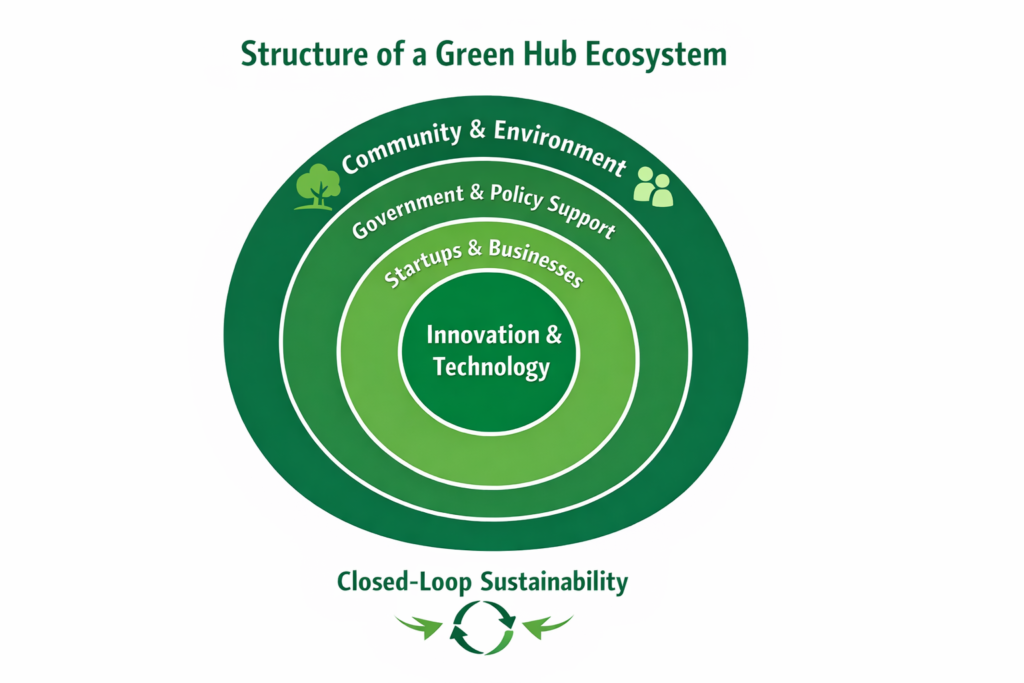
    Figure 1: Structure of a Green Hub Ecosystem

    Imagine a circular model where different elements interact:

    • Center: Innovation & Technology
    • Layer 1: Startups and Businesses
    • Layer 2: Government & Policy Support
    • Layer 3: Community & Environment

    This circular design represents the closed-loop system. It is a key principle of sustainability where waste from one process becomes input for another.

    Acknowledgment: AI generated image

    Benefits of Green Hubs

    1. Environmental Sustainability

    Green hubs reduce carbon emissions. These hubs promote renewable energy and efficient resource use.

    2. Economic Growth

    They create jobs, attract investments, and support green entrepreneurship. They also contribute to economic diversification.

    3. Social Development

    By involving communities, green hubs enhance awareness and improve quality of life.

    4. Technological Advancement

    They accelerate the development and deployment of green technologies.

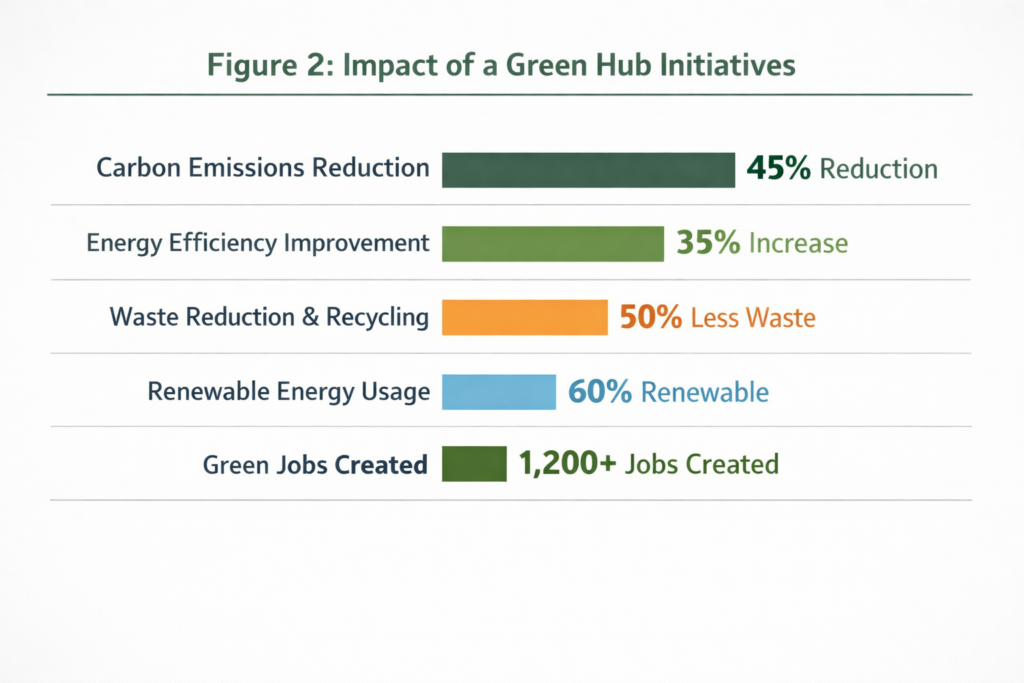
    Figure 2: Impact of Green Hubs

    A simple bar representation can illustrate the impact:

    • Carbon Emissions Reduction: 40–60%
    • Energy Efficiency Improvement: 30–50%
    • Waste Reduction: 50–70%
    • Job Creation Increase: 20–35%

    These figures vary by region but highlight the transformative potential of green hubs.

    Acknowledgment: AI generated image

    Emerging Trends in Green Hubs (2026 and Beyond)

    1. Integration of Artificial Intelligence

    AI is increasingly being used to optimize energy consumption. AI has the potential to predict environmental risks, and manage smart grids within green hubs.

    2. Circular Economy Models

    Green hubs are shifting from linear production systems to circular models. In these models materials are reused, recycled, and regenerated.

    3. Climate-Tech Startups

    A new wave of startups focuses on climate solutions. They can be in carbon capture, green hydrogen, and sustainable materials forms.

    4. Digital Green Hubs

    Virtual platforms are emerging. They are emerging and taking active participation worldwide. They allow global collaboration without geographical limitations. These digital hubs connect researchers, investors, and policymakers worldwide.

    5. Net-Zero Infrastructures

    Green hubs are adopting net-zero strategies. Total greenhouse gases emissions are balanced by removal or offset are ensured.

    Challenges Facing Green Hubs

    Despite their potential, green hubs face several challenges:

    • High initial investment costs
    • Lack of skilled workforce in green technologies
    • Policy inconsistencies
    • Limited awareness in developing regions

    These barriers require coordinated efforts from all stakeholders.

    Green Hubs in Developing Regions

    In countries like Pakistan, green hubs can play a crucial role in:

    • Address energy shortages through solar and wind projects
    • Promote sustainable agriculture practices
    • Manage urban pollution and waste
    • Supports youth entrepreneurship in green sectors

    Local adaptation is key contributor in green hubs. It aligns with regional needs, resources, and socioeconomic conditions.

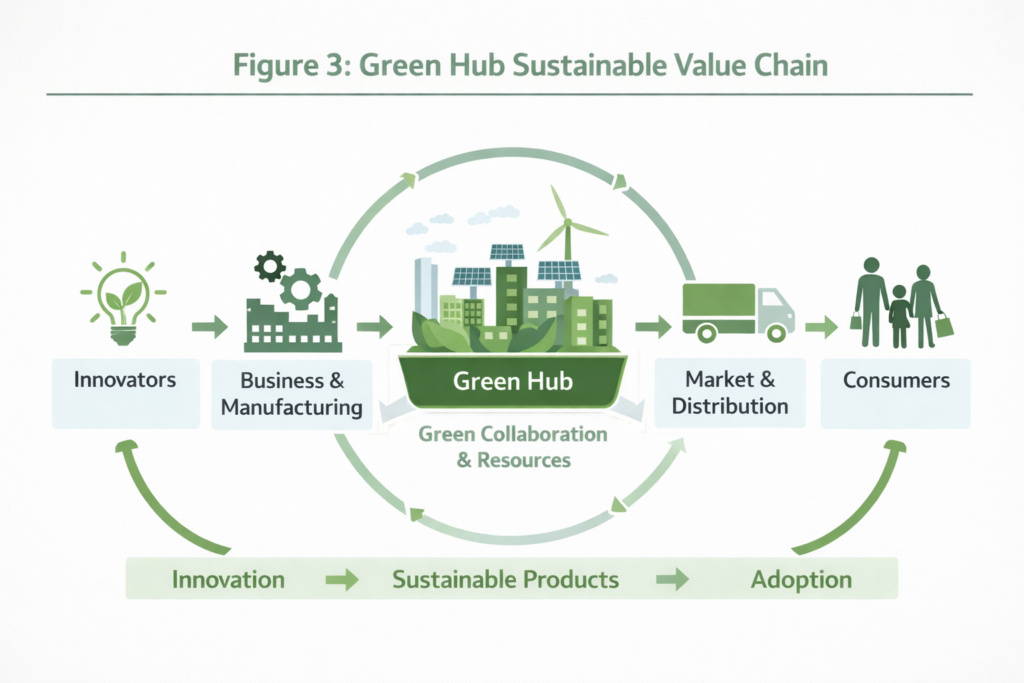
    Figure 3: Green Hub Value Chain

    A linear flow diagram can represent the value chain:

    Input (Resources & Funding) → Innovation → Implementation → Impact (Environmental, Economic, Social)

    This highlights how ideas are transformed into measurable outcomes.

    Acknowledgment: AI generated image

    Future Outlook

    The importance of green hubs will continue to grow. In current era nations strive to meet sustainability targets and climate commitments. They are expected to become central to:

    • Smart city development
    • Renewable energy expansion
    • Sustainable industrial transformation

    Green hubs are not just an environmental solution but they are a comprehensive framework for sustainable development.

    Conclusion

    A green hub represents a powerful convergence of innovation. It justifies sustainability, and collaboration. By integrating technology, policy, and community engagement, these hubs offer practical solutions. They are potentially strong forum to some of the world’s most pressing environmental challenges.

    As we move toward a greener future, the expansion and evolution of green hubs will be essential. Either in any form they are indespensible. Whether in urban centers or rural landscapes, they hold the potential to redefine how we produce, consume, and live. They ensure a balanced and sustainable world for future generations.

    March 22, 2026
  • Energy-Policy Rollbacks vs. Climate Goals: A Global Dilemma in the Energy Transition

    In recent years, humanity is facing one of a major challenge in the form of climate changes. Governments around the world are committed to ambitious climate goals. Prime goal is to limit global warming to 1.5°C above pre-industrial levels. Other is achieving net-zero greenhouse gas emissions by 2050. However, a growing global trend is creating tension between these ambitions and political reality: energy-policy rollbacks.

    Energy-policy rollbacks refer to decisions by governments to weaken, delay, or reverse climate and clean-energy policies. These decisions are short term focused. Economic growth, energy security, or political pressures over long-term environmental sustainability are prioritized. That is the reason global energy transition is facing hurdles and seems complex.

    This blog explores why energy-policy rollbacks are happening. We will also discuss how rollbacks affect climate goals, and what the future might hold for the global energy system.

    Understanding Energy-Policy Rollbacks

    Energy policy rollbacks are a policy initiated by the state. Governments take actions and scale back environmental regulations. It involves reduce funding for renewable energy programs, or increase support for fossil fuels such as coal, oil, and natural gas. These changes may also involve removing subsidies targeted for clean energy. Therefore it weakens emissions standards, or encourages fossil fuel extraction. Such actions are undesirable from sustainability perspective.

    For example, some governments rolled back climate regulations in order to strengthen domestic oil and gas industries. While other have the choice to reduce renewable energy incentives or reduce energy costs for consumers. In certain cases, federal climate programs and renewable mandates have been scaled back while fossil fuels are promoted as a foundation of energy security.

    Similarly, several regions have reconsidered environmental policies due to economic pressures and political debates. Critics warn that these policy shifts could slow down progress toward climate targets and increase long-term environmental risks.

    While these decisions may appear practical in the short term, they often raise serious questions about whether countries can still meet their climate commitments.

    Why Governments Are Rolling Back Climate Policies

    Energy policy rollbacks are rarely caused by a single factor. Instead, they result from a combination of economic, political, and social pressures.

    1. Energy Security Concerns

    Many countries worry about energy shortages or rising energy prices. Global crises, geopolitical conflicts, and supply disruptions make reliance on domestic fossil fuels. This ensures stable energy supplies.

    For instance, governments often increase coal, oil, and gas production during periods of energy instability. This approach is seen as a quick solution to maintain energy security. This practice is commonly used which also brings economic stability.

    2. Economic and Political Pressures

    Energy policy is closely tied to economic growth and other economic privileges like employment. Fossil fuel industries provide millions of jobs worldwide. It also contributes significantly to national revenues stabilizing state institutions.

    Because of this, during economic downturns, political leaders prioritize protecting these industries. They often prioritize issues like energy affordability and employment. However, according to public opinion climate change recognized as a serious problem.

    3. Rising Energy Demand

    By the expansion of urbanization and population growth, global energy demand increases. This increase in energy demand is projected to grow more than 3% annually in 2025. Fufilling this demand is essential and need timely actions.

    To fulfill this demand through renewable energy alone can be challenging.  In the short term, it may lead governments to maintain or expand fossil fuel production.

    The Growing Fossil Fuel Expansion

    Despite global climate commitments, many countries are planning to expand fossil fuel production. Governments are intended to produce more than twice the amount of fossil fuels by 2030. It aims to limit global warming to 1.5°C.

    This gap between planned fossil fuel production and climate targets is referred as the “production gap.” It highlights the contradiction between climate promises and real-world energy strategies.

    In some countries, government subsidies for fossil fuels remain extremely high. For example, one analysis found that Australia alone provides billions of dollars in fossil fuel subsidies each year, encouraging continued use of coal, oil, and gas.

    Such financial incentives make it harder for renewable energy to compete. Clean technologies are becoming cheaper still adaption to these technologies is tough.

    Are Climate Goals Still Achievable?

    Despite policy rollbacks, many experts believe that global climate goals are still technically achievable. However, the window for action to achieve mentioned climate goals is narrow.

    Reports show that renewable energy technologies such as wind and solar are becoming affordable. In fact, more than 90% of new renewable energy projects are now cheaper than fossil-fuel alternatives.

    This economic shift is a powerful driver of the clean energy transition. Even, governments reduce climate policies following the transition. Still, market forces may still push renewable energy forward.  All these transitions provide the lowest-cost electricity.

    However, policy uncertainty can slow investment in clean technologies. Companies and investors prefer stable regulatory environments. These regulatory environments are followed by frequent policy changes can discourage large-scale renewable projects.

    The Climate Risks of Policy Reversals

    Rolling back climate policies carries several major risks for future generations.

    1. Rising Global Emissions

    Reducing climate regulations can increase greenhouse gas emissions. Some analysts warn that policy reversals could add billions of tons of carbon dioxide to the atmosphere. It will add up over the coming decades.

    Higher emissions make it harder to limit global warming. Thus it will be likely to have severe climate impacts such as heatwaves, droughts, floods, and sea-level rise.

    2. Economic Costs of Climate Disasters

    Extreme weather is more frequent and more expensive. Climate-related disasters have already caused hundreds of billions of dollars in damages in recent years.

    If emissions continue to rise, these economic losses could grow dramatically. They will affect not only public health but infrastructure and agriculture.

    3. Loss of Global Leadership

    Countries that roll back climate policies risk are more vulnerable to lose their leadership in emerging green industries. Renewable energy, electric vehicles, and clean technology sectors are expected to create millions of jobs in the coming decades.

    If governments slow this mega transition, they may miss economic opportunities associated with global green economy.

    Signs of Progress Despite Rollbacks

    Although policy rollbacks have too many related concerns. The global clean-energy transition has not stopped. It is frequent and gradual. In fact, several positive trends suggest that progress is still happening.

    Rapid Growth of Renewable Energy

    Global investment in renewable energy continues to rise. Solar and wind power installations are expanding rapidly in many countries.

    Technological Innovation

    Advances in battery storage, hydrogen energy, and carbon capture technologies are improving. Therefore, the feasibility of low-carbon energy systems also expanding.

    Market-Driven Transition

    Weak climate policies in regions are subject to market forces. Market supports clean energy because it is becoming cheaper and more efficient.

    According to energy analysts, the world may still see fossil-fuel demand peak before 2030 if current trends continue.

    This suggests that economic and technological factors could drive

    Balancing Energy Security and Climate Action

    Energy security, economic growth, and climate protection are key challenges. Many experts recommend a more balanced approach.

    Possible strategies include:

    • Investing heavily in renewable energy infrastructure
    • Supporting energy efficiency and electrification
    • Gradually phasing out fossil fuel subsidies
    • Developing energy storage and smart grids
    • Encouraging green innovation and research

    These strategies can help countries maintain reliable energy supplies while still reducing emissions.

    The Future of Global Energy Policy

    The coming decade will determine whether the world can meet its climate targets. Governments face difficult choices. They have to face economic pressures, energy demand, and environmental responsibilities. These challenges may exacerbate in US-Iran conflict.

    Energy policy rollbacks highlight the political complexity of the energy transition. Climate commitments remain strong in many international agreements. While, real-world policy decisions often reflect competing priorities.

    Ultimately, the future of climate action will depend on cooperation between governments, businesses, and communities. A tie between strong policies, technological innovation, and public awareness will all play crucial role. It will shape the next phase of the global energy transition.

    Conclusion

    The tension between energy-policy rollbacks and climate goals represents one of the defining challenges of our time. On one hand, governments must ensure affordable and reliable energy for their citizens. On the other hand, they must address the urgent threat of climate change.

    While recent policy reversals have slowed progress in some areas. The great concern over broader transition toward clean energy continues. Renewable technologies are cheaper, public awareness of climate risks is increasing, and global investment in green energy is rising.

    The ultimate question is not whether the energy transition will happen? The decisions made today will determine whether the world can achieve its climate goals and secure a sustainable future for generations to come.

    March 21, 2026
  • What Is a Green Hub? Meaning, Purpose, and Examples and Global Trends

    In recent years, the concept of a green hub has gained much attention. It discusses issues related to sustainability, climate action, and innovation. Countries and cities are finding solutions to these issues. At present, they are facing challenges such as climate change, pollution, and resource scarcity. Therefore, collaborative spaces focused on sustainability are essential.

    A green hub is more than just a physical location. It is an ecosystem and a hub where innovation, technology, policy, and community efforts come together. All participate in sustainable solutions for the future.

    This article explains the meaning of a green hub, its purpose, key characteristics, and real-world examples. Besides these, it also explores the emerging trends that shape green hubs globally.

    Meaning of a Green Hub

    A green hub refers to a collaborative platform dedicated to sustainable practices. It focuses on providing awareness of environmental technologies and policies. These hubs typically bring together stakeholders across various disciplines. They can be researchers, entrepreneurs, policymakers, investors, and community organizations to work on sustainable solutions.

    In many cases, green hubs act as innovation ecosystems. It provides resources, infrastructure, and mentorship for projects focused on environmental sustainability. They support various sectors of the economy as renewable energy, circular economy, sustainable agriculture, and green technology.

    For example, a green innovation hub may function as a regional center. It takes into account various startups, academic institutions, and government agencies. All of them collaborate to develop environmentally friendly technologies, especially bringing ideas to make waste into value.

    In essence, a green hub serves as a meeting point for ideas aimed at building a sustainable future.

    Purpose of Green Hubs

    Green hubs address the most persistent environmental challenges facing society today. Their purpose is to accelerate the transition toward sustainable economic and social systems. They cover the paradigm of elements like:

    1. Sustainable Innovation

    One of the main objectives of green hubs is to encourage environmentally friendly technologies and business models. These hubs support research and development.  The domain covered by these hubs is renewable energy, sustainable infrastructure, waste to value, and climate-smart agriculture. Thus, green hubs transform innovative ideas into real-world solutions.

    2. Encourage Collaboration

    In order to collaborate effectively, green hubs create a conducive environment. Collaboration involves universities, startups, government institutions, and private companies. They work together to develop solutions in the wake of complex environmental problems. They often require interdisciplinary solutions in response to the sustainability challenges.

    3. Support Green Entrepreneurship

    Many green hubs function as incubators. They bring an infrastructure to those accelerators startups on climate and sustainability innovations. Entrepreneurs receive mentorship, access to funding networks, and technical support to scale their ideas. For instance, some innovation hubs bring together businesses, educational institutions, and governments to collaborate on sustainable development initiatives.

    4. Advance Climate Action

    Green hubs also contribute to global climate goals. They follow the Sustainable Development Goals (SDGs) by the United Nations. They promote technologies and strategies that contribute to the environment. The area of domain involves a reduction in greenhouse gas emissions, improvement in resource efficiency, and support for climate adaptation. Through these initiatives, green hubs play a role in the transition to low-carbon economies.

    Key Characteristics of a Green Hub

    Although green hubs may differ in size and structure. However, they share several common characteristics.

    1. Multi-Stakeholder Collaboration

    Green hubs usually involve partnerships. As discussed above, universities, governments, businesses, NGOs, and civil society organizations are actively involved. Recently, it is advocated that universities should be given prime preference to be involved. Their purpose is to share knowledge, resources, and expertise across sectors.

    2. Focus on Sustainable Technologies

    Many green hubs concentrate on developing technologies. These technologies are environmentally sustainable, economic, and serve society the most. These may include:

    • Renewable energy technologies
    • Waste recycling systems
    • Smart agriculture solutions
    • Energy-efficient infrastructure
    • Climate monitoring technologies

    3. Innovation and Research

    Green hubs often provide research facilities, laboratories, or testing environments. They provide a house of sustainability where new sustainable technologies can be developed and evaluated. Later, these technologies were commercialized.

    4. Community Engagement

    Some green hubs also focus on raising environmental awareness. Various educational programs, seminars, conferences, and summits are being arranged. Experts and interested stakeholders take an active part. Their purpose is to promote sustainable lifestyles within local communities.

    Workshops and public events are also organized to encourage citizens to adopt environmentally responsible behaviors.

    For example, certain sustainability centers focus on environmental education and community engagement to promote sustainable living practices.

    Examples of Green Hubs around the World

    Green hubs exist in many parts of the world, but their work and activity are being performed worldwide.  Each of their activity has its own focus and objectives.

    1. University-Based Green Hubs

    Many universities are establishing green hubs to promote research and innovation. Their basic aim is to perform work related to sustainability. These hubs often support students and researchers working on sustainability. They cover long range of disciplines like climate change solutions, circular economy projects, and environmental technologies.

    For example, some university initiatives focus on waste management and carbon literacy. However, the involvement of the community is a primary factor.

    2. Innovation and Technology Hubs

    Some green hubs are dedicated to supporting climate-tech startups. They involve mentorship and sustainable innovation ecosystems.

    These hubs provide:

    • incubation programs
    • networking opportunities
    • access to investors

    Such innovation hubs aim to accelerate the development of technologies. They bring innovation, generally named as green innovation. They address climate change and resource efficiency.

    3. Regional Energy and Sustainability Hubs

    Certain regions develop green hubs to transform local economies. They fund and support them financially and through various economic privileges like tax rebates and subsidies. It is done in response to the promotion of renewable energy and environmental initiatives.

    For example, regional energy programs connect businesses with renewable energy systems.

    Emerging Trends in Green Hubs

    As global attention on sustainability intensifies, green hubs have started evolving rapidly. Several emerging trends are shaping their future.

    1. Climate-Tech Innovation

    One of the fastest-growing trends in green hubs is the rise of climate-tech startups. They are taking the place of many other startups and are among the preferred trending startups. These startups develop technologies to reduce carbon emissions. They also serve other functions as improving energy efficiency and enhancing climate resilience.

    Examples include innovations in:

    • carbon capture technologies
    • green hydrogen production
    • smart grids
    • sustainable mobility

    Many green hubs now serve as climate-tech accelerators.

    2. Circular Economy Hubs

    Circular economy hubs are another emerging trend. Their aim is to focus on reduced waste and maximized resource efficiency.

    Circular economy initiatives often promote:

    • recycling and waste-to-resource systems
    • product reuse and remanufacturing
    • sustainable production processes

    These hubs help industries transition from linear consumption models to sustainable circular systems.

    3. Green Innovation Districts

    Cities around the world are creating green innovation districts. These districts are designed especially near the urban areas. These incredible and unique districts support sustainable technology development and environmental entrepreneurship.

    For example, sustainable economic growth, clean energy solutions, and green technology startups are the hotspots of these trends.

    These districts attract investment, generate employment opportunities, and strengthen sustainable economic development.

    4. Digital and Green Transformation

    Another emerging trend is the integration of digital technologies with sustainability initiatives.

    Digital tools such as artificial intelligence used to monitor environmental conditions. They also include sensor networks, and data analytics assist in optimized resource use.

    Some hubs focus specifically on digital innovation. These promote sustainable business practices and reduce carbon footprints.

    Why Green Hubs Matter for the Future

    The green hubs reflect a broader shift toward sustainability-driven economic development. That is why it gained a special attraction.

    These hubs contribute to:

    • accelerating climate solutions
    • fostering sustainable entrepreneurship
    • supporting green job creation
    • promoting environmental awareness
    • strengthening collaboration across sectors

    Prioritized sustainability practices are emphasized in governments, businesses, and communities.   Among these, green hubs become key drivers of innovation and environmental progress.

    Conclusion

    A green hub represents a powerful model that addresses environmental challenges. The solution to these challenges is possible through collaboration, innovation, and sustainable development. By bringing together diverse stakeholders, green hubs create dynamic ecosystems.  They involve entrepreneurs and researchers to policymakers, and communities.

    Attention please: If you found this article helpful, explore more insights on sustainability and green innovation at Green Hub Initiative. Your feedback and comments are always welcome.

    March 12, 2026
1 2
Next Page
Green HUB Initiative–A sustainability Organization

Green HUB Initiative–A sustainability Organization

  • Instagram
  • Facebook
  • X
  • About
  • Blog
  • Contact
  • Disclaimer
  • FAQ
  • Forms
  • Green HUB Portfolio
  • Home
  • Privacy Policy
  • Team
  • Terms and Conditions
  • What is nbs?

Powered by
►
Necessary cookies enable essential site features like secure log-ins and consent preference adjustments. They do not store personal data.
None
►
Functional cookies support features like content sharing on social media, collecting feedback, and enabling third-party tools.
None
►
Analytical cookies track visitor interactions, providing insights on metrics like visitor count, bounce rate, and traffic sources.
None
►
Advertisement cookies deliver personalized ads based on your previous visits and analyze the effectiveness of ad campaigns.
None
►
Unclassified cookies are cookies that we are in the process of classifying, together with the providers of individual cookies.
None
Powered by